
Attending the Rossfechten Seminar 2026 was, in many ways, as inspiring as the subject matter itself. Held on the 2–3 of May 2026 at the foot of the Brandenburg, this invitation only event in the beautifully preserved medieval village of Lauchröden, takes place within a former Rittergut — a knightly estate. As environments go, this naturally reinforces the historic foundations of our work, transitioning from tradition ‘in theory’ to a more meaningful practice in a location that still carries echoes of our past.
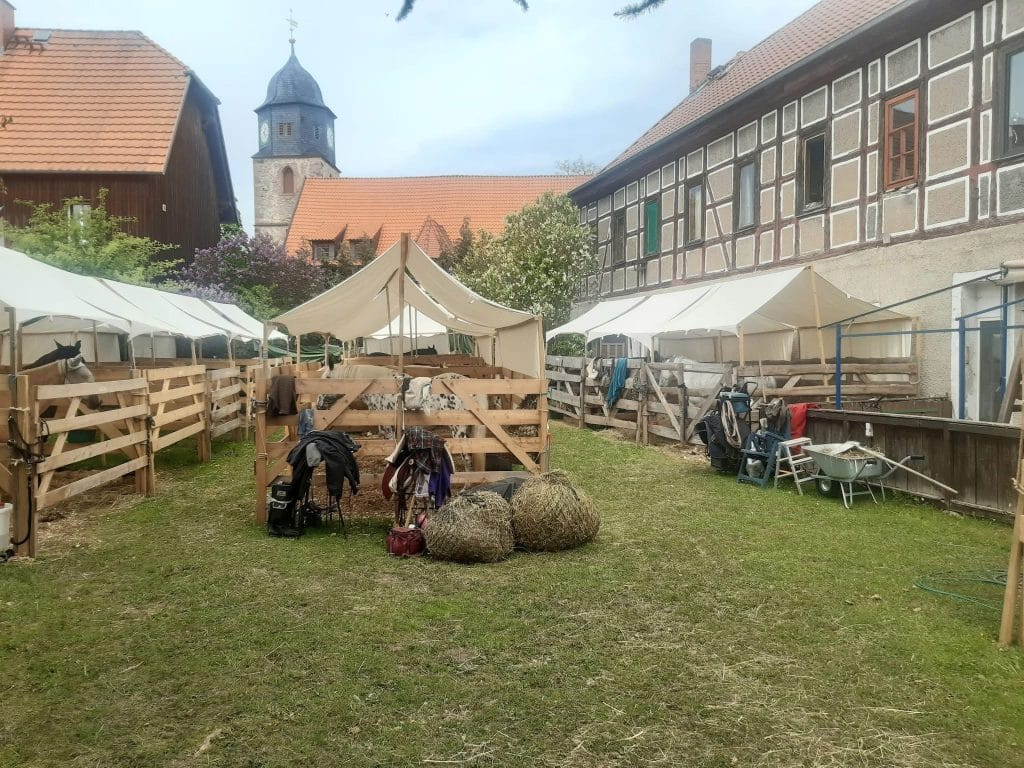
Just some of the temporary stables at the back of the fortified manor (image courtesy of Philipp Wirtz)
Organised by Arne Koets, the seminar brought together an international group of around 120 riders and researchers to explore historic mounted combat methodologies in a practical context. I was especially proud to have been invited to teach on the use of the heavy lance in 15th–16th century battlefield practice. The effective use of the lance requires not only strength and coordination, but an understanding of momentum, alignment, and timing.
It was deeply rewarding to see participants engaging seriously with these challenges. The heavy lance is not forgiving and punishes hesitation. Working through its mechanics in a controlled training environment allows us to better understand the demands placed on our historic counterparts.
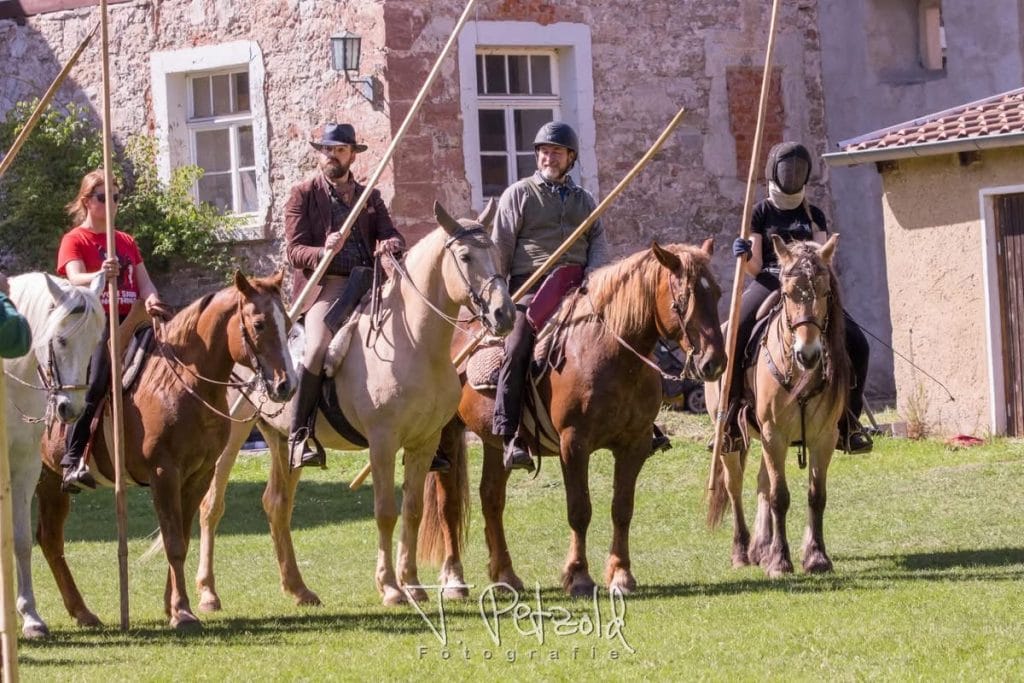
Mounted combat is a demanding enough discipline as it is, but amongst so many expert practitioners, I felt decidedly out of my depth! (image courtesy of Theresa Petzold)
Arne Koets’ Workshops: Technical Mounted Practice
Arne’s sessions were, as expected, highly technical and grounded in deep practical experience. His ability to analyse rider posture, balance, timing, and weapon control while mounted ‘and’ fully participating at the same time remains exceptional. Working through structured exercises, we examined not only individual techniques but the broader principles that govern effective mounted combat — specifically the structure and control of the horse’s movement, and the integration of rider and mount as a single tactical system.
The session was a fascinating hands-on exploration of how historic concepts translate into an efficient and functional reality. The level of precision required left no room for superficial understanding, and the workshop reflected that standard throughout.
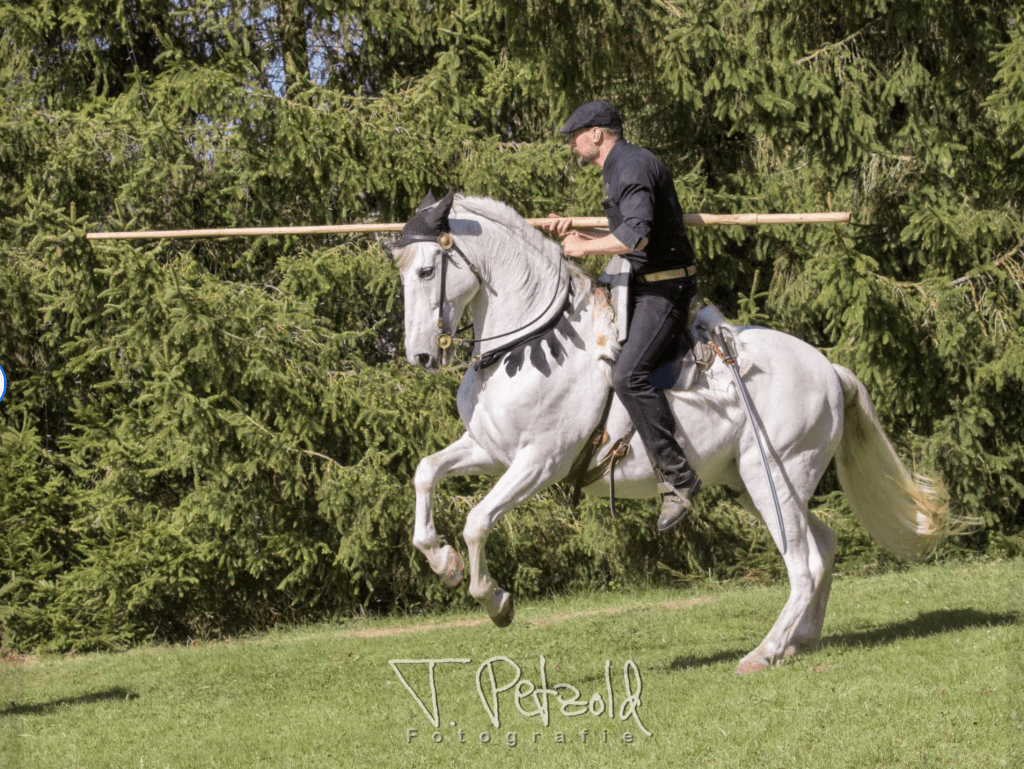
Arne riding on Max – yes, he actually does always look like that! (image courtesy of Theresa Petzold)
Ariel Garcia: Spanish Lance
Another highlight of the seminar was the workshop on the Spanish use of the light lance, taught by Ariel Garcia, who travelled all the way from Argentina to share his expertise. His session offered a valuable contrast to the heavy battlefield lance, focusing instead on variations in grip and formation movement.
The international nature of Ariel’s participation reinforces the global reach of mounted historic research, and the seriousness with which this field is now being studied.
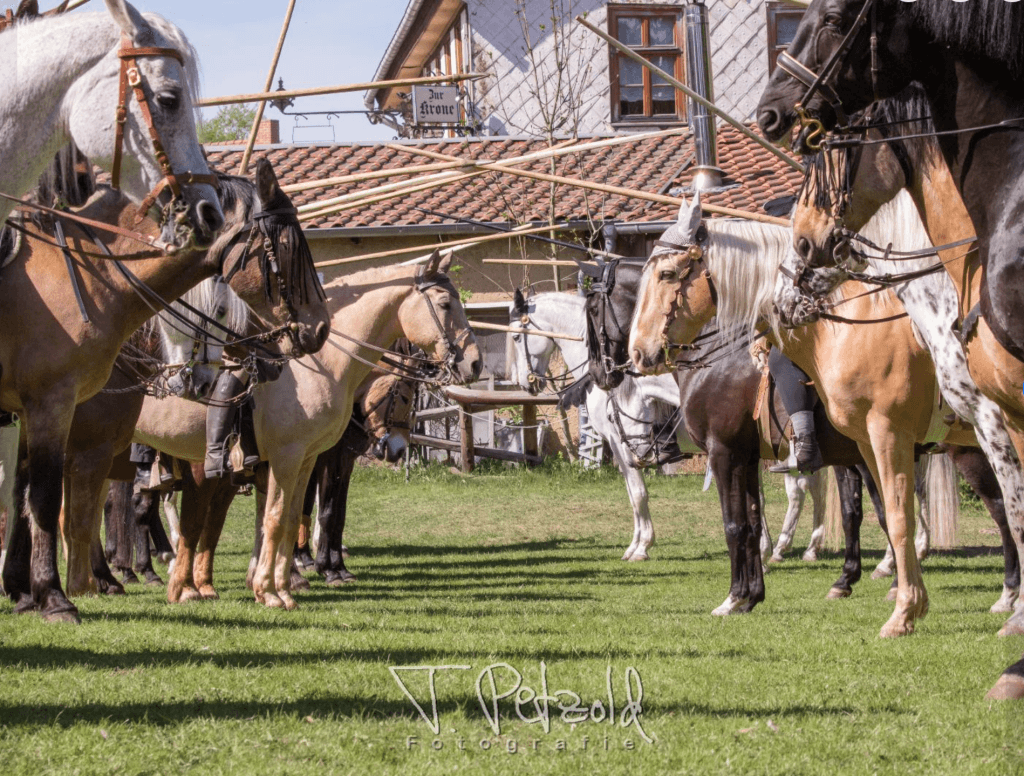
Ariel included moving formations of horses through one another, and travelling with the lance (image courtesy of Theresa Petzold)
Reflections on the Seminar
While there were many additional workshops, highlights and lectures of note, we simply do not have the space in this article to give them all the mention they deserve. My overall impression of the Rossfechten Seminar was one of great technical depth and focused collaboration. The dedication of the participants created an environment conducive to genuine progress.
Events such as this are not simply training weekends; they are forums for refining methodology, comparing interpretations, and strengthening the broader community of practitioners.
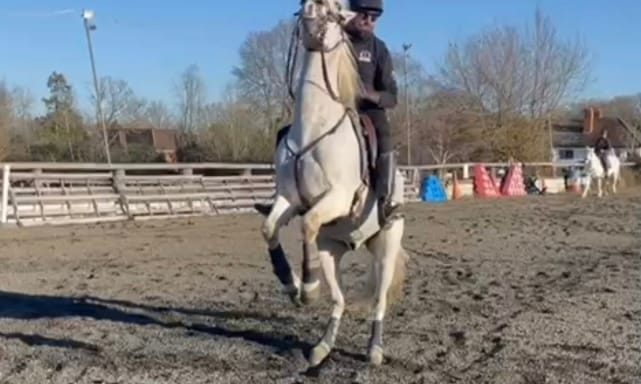
Your humble self, pretending he did something clever… (image courtesy of Sarah Lentle)
I left the event with renewed appreciation for the complexity of historic mounted combat — and for the continued effort required to study it with the seriousness it deserves. There is a lot for me to think about and endless opportunity to improve…